Accounts Payable
Accounts Payable
Accounts Payable
The Procure-to-Pay (P2P) Process: Seven Steps, Explained
The procure-to-pay process runs from requisition to payment in seven steps. See each stage, where the process leaks value, and how automation closes the gaps.

Shobhit Gupta
•
10
min read
QUICK ANSWER
The procure-to-pay process, often shortened to P2P, is the full cycle a business follows to buy goods or services and pay for them, from the moment someone requests a purchase to the moment the supplier is paid. It links procurement and finance into one flow: requisition, approval, purchase order, receipt, invoice, matching, and payment. Run well, procure-to-pay controls spend, prevents overpayment, and keeps suppliers paid on time. Run in disconnected systems, it leaks money at the joins. This guide walks through the seven steps, the common problems, and where automation makes the difference.
Requisition to payment
1
Requisition
2
Approval
3
Purchase Order
4
Receipt
5
Invoice
6
Matching
7
Payment
1
Requisition
2
Approval
3
Purchase Order
4
Receipt
5
Invoice
6
Matching
7
Payment
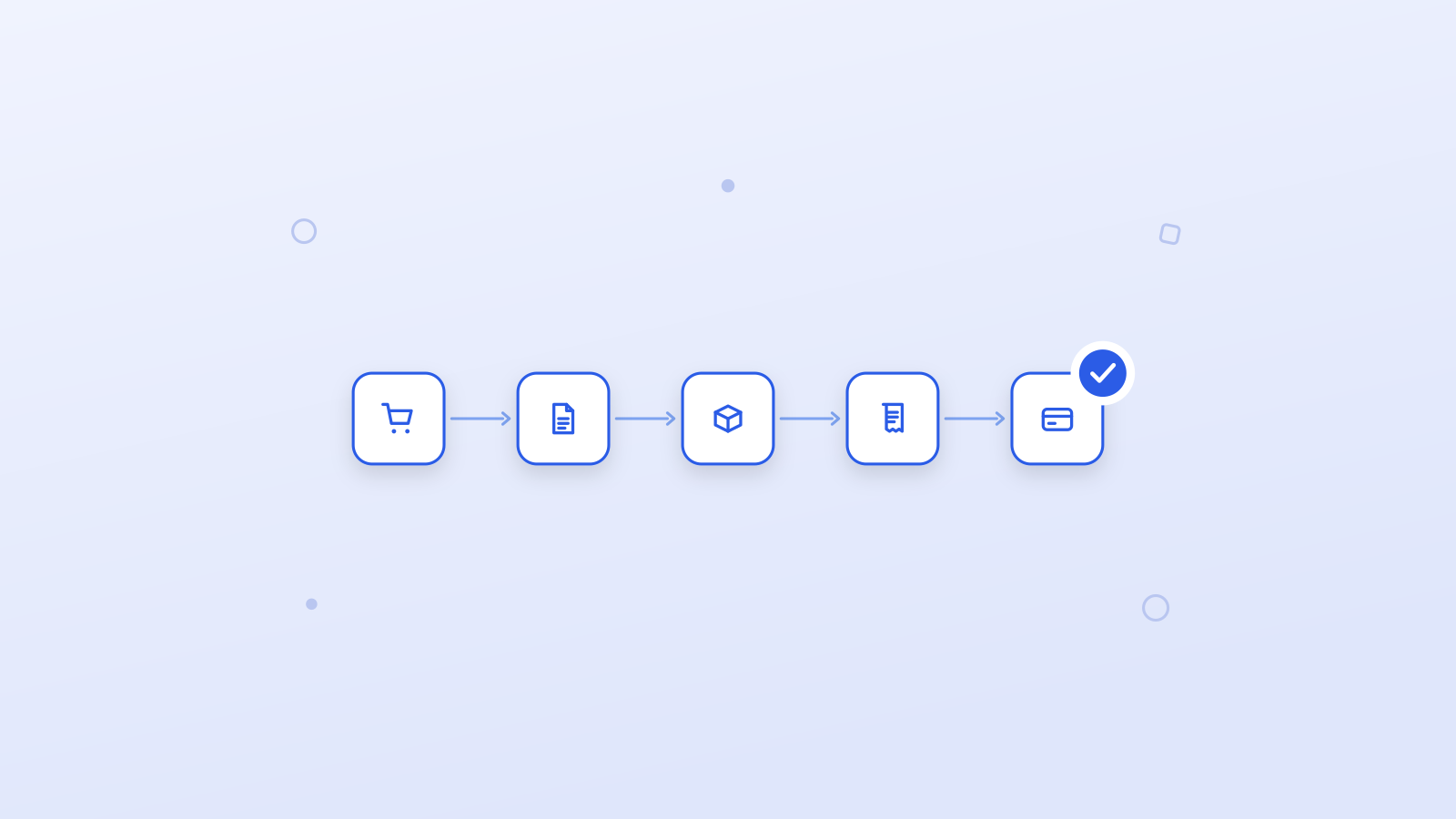
Seven steps, requisition to payment. Receipt is the hinge between procurement and finance, and where the process leaks or holds.
What is the procure-to-pay process?
The procure-to-pay process is the end-to-end sequence that connects buying something to paying for it. It begins when a team identifies a need and raises a request, and it ends when the supplier's invoice is approved and paid, with every step in between designed to make sure the business buys what it needs, at the agreed price, and pays only for what it actually received.
P2P spans two functions that are often run separately. Procurement owns the front half, deciding what to buy and issuing the purchase order. Finance owns the back half, receiving the invoice and paying it. The accounts payable team sits at the end of the cycle, and the contract behind the purchase governs the terms throughout. When those pieces connect, the process is a control. When they do not, it is a series of handoffs where errors hide.
The seven steps of procure-to-pay
Most procure-to-pay processes follow the same seven steps, whatever the industry.
STEP | WHAT HAPPENS |
|---|---|
1. Requisition | A team requests a purchase and states what it needs |
2. Approval | The request is approved against budget and policy |
3. Purchase order | A PO is issued to the supplier, stating items, quantities, and price |
4. Goods or service receipt | The delivery is received and recorded |
5. Invoice receipt | The supplier submits an invoice referencing the PO |
6. Invoice matching | The invoice is checked against the PO, the receipt, and the contract |
7. Payment | The approved invoice is paid within the agreed terms |
The first three steps are procurement. The last three are finance. Step four, receipt, is the hinge between them. The whole process only works as a control if information flows cleanly across that procurement-to-finance boundary, which is exactly where disconnected systems fail.
Procure-to-pay vs purchase-to-pay vs source-to-pay
The terms overlap and get used loosely, so it is worth separating them.
Procure-to-pay (P2P) covers requisition through payment: the operational cycle of buying and paying.
Purchase-to-pay is used interchangeably with procure-to-pay. The two mean the same end-to-end process.
Source-to-pay (S2P) is broader. It adds the upstream sourcing work, finding suppliers, running tenders, and negotiating contracts, in front of procure-to-pay.
In short, source-to-pay includes procure-to-pay and adds sourcing before it. For most day-to-day operations, procure-to-pay is the cycle that matters, because it is where spend is controlled and payments are made.
Common procure-to-pay challenges
The same problems recur across procure-to-pay, and nearly all of them sit at the joins between steps.
Maverick spend. Purchases made outside the process, with no PO, so they are hard to control or match later.
Manual data entry. Requisitions and invoices keyed by hand, which is slow and introduces errors downstream.
Invoice exceptions. Invoices that do not match the PO or receipt, which pile up and stall payment.
Slow approvals. Requests and invoices waiting in inboxes, so the cycle stretches and discounts are missed.
Poor visibility. No single view of what has been ordered, received, and owed, so finance cannot plan.
The disconnected contract. The agreement that set the price and terms sits in another system, so no one checks the invoice against it.
The last one is the most expensive and the least visible, and it deserves its own section.
The gap that quietly costs the most
In most procure-to-pay setups, invoice matching checks the invoice against the purchase order and the receipt. That is 3-way invoice matching, and it is a genuine control. But the purchase order is not the full agreement. The contract behind it holds the negotiated rate, the volume discount, and the payment terms, and those are frequently the terms that decide what is actually owed.
When the contract lives in a separate system from accounts payable, that information never reaches the person approving the invoice. A rate that was negotiated down sits in a contract nobody opened, and the invoice is paid at the higher figure on the purchase order.
Every document in the AP system agreed with every other one. The only document that disagreed was the contract, and it was not in the process.
This is the single largest source of quiet leakage in procure-to-pay, because nothing looks wrong.
How to measure a healthy procure-to-pay process
A few metrics show whether procure-to-pay is working, and they point to where it is not.
Invoice exception rate. The share of invoices that fail matching and need manual review. A high rate means the front of the process, POs and receipts, is not clean.
Straight-through processing rate. The share of invoices that clear from receipt to payment with no manual touch. Higher is better, and it is the clearest measure of automation.
Days payable outstanding. How long the business takes to pay suppliers, a working-capital signal covered in our guide to days payable outstanding.
Cost per invoice. The all-in cost to process one invoice, which falls sharply with automation.
Maverick spend rate. The share of spend made outside the process, which is the control gap at the front of the cycle.
Tracked together, these show whether the process is a control or a series of leaks, and they make the case for fixing the weakest step first.
How automation improves procure-to-pay
Automation improves procure-to-pay by removing the manual reading and matching at the joins, and by closing the gap between the contract and the invoice. Instead of keying requisitions and comparing documents by hand, an AI agent captures the data, matches it, clears the clean transactions, and escalates only the exceptions.
Aviara Connect runs the finance half of procure-to-pay on one platform that also holds the contracts. Its Invoice Agent extracts invoice data, matches each invoice against its purchase order and the underlying contract terms, flags discrepancies, and generates a credit memo when a mismatch is found. Because the contract and the invoice sit together, an agreed rate or discount that never reached the purchase order is still enforced.
COVA, the agentic operating system that powers Aviara Connect, lets a finance or procurement lead ask, in plain language, what a supplier's contract says about a rate or a payment term, and get the answer from the organisation's own agreements without leaving the process. The platform runs in production at scale, including an AI search agent for NTPC, India's largest power company, serving more than 8,000 daily users across finance, procurement, and HR. Aviara Labs is an AWS Certified Build Partner with Aviara Connect listed on AWS Marketplace, holds a 5.0 rating on Clutch and G2, and serves 15 or more paying customers across India, the US, and the UAE.
If the procurement-to-finance gap is where your process leaks, our guide to AP automation software compares the options, or you can start a free trial.
Proof in production
8,000+
daily users across finance and procurement on NTPC
5.0
rating on Clutch and G2
15+
paying customers across India, the US, and the UAE
AWS
Certified Build Partner, listed on AWS Marketplace
Close the gap where P2P leaks
If the procurement-to-finance gap is where your process leaks value, start a free trial and match invoices against the contract, not just the purchase order, or book a short call to see it first.
Frequently Asked Questions
What is the procure-to-pay process?
Procure-to-pay is the end-to-end cycle a business follows to buy goods or services and pay for them, from a purchase request through to supplier payment. It links procurement and finance across seven steps: requisition, approval, purchase order, receipt, invoice, matching, and payment.
What are the steps in the procure-to-pay process?
What is the difference between procure-to-pay and source-to-pay?
Is procure-to-pay the same as purchase-to-pay?
How does automation improve procure-to-pay?
QUICK ANSWER
The procure-to-pay process, often shortened to P2P, is the full cycle a business follows to buy goods or services and pay for them, from the moment someone requests a purchase to the moment the supplier is paid. It links procurement and finance into one flow: requisition, approval, purchase order, receipt, invoice, matching, and payment. Run well, procure-to-pay controls spend, prevents overpayment, and keeps suppliers paid on time. Run in disconnected systems, it leaks money at the joins. This guide walks through the seven steps, the common problems, and where automation makes the difference.
Requisition to payment
1
Requisition
2
Approval
3
Purchase Order
4
Receipt
5
Invoice
6
Matching
7
Payment
Seven steps, requisition to payment. Receipt is the hinge between procurement and finance, and where the process leaks or holds.
What is the procure-to-pay process?
The procure-to-pay process is the end-to-end sequence that connects buying something to paying for it. It begins when a team identifies a need and raises a request, and it ends when the supplier's invoice is approved and paid, with every step in between designed to make sure the business buys what it needs, at the agreed price, and pays only for what it actually received.
P2P spans two functions that are often run separately. Procurement owns the front half, deciding what to buy and issuing the purchase order. Finance owns the back half, receiving the invoice and paying it. The accounts payable team sits at the end of the cycle, and the contract behind the purchase governs the terms throughout. When those pieces connect, the process is a control. When they do not, it is a series of handoffs where errors hide.
The seven steps of procure-to-pay
Most procure-to-pay processes follow the same seven steps, whatever the industry.
STEP | WHAT HAPPENS |
|---|---|
1. Requisition | A team requests a purchase and states what it needs |
2. Approval | The request is approved against budget and policy |
3. Purchase order | A PO is issued to the supplier, stating items, quantities, and price |
4. Goods or service receipt | The delivery is received and recorded |
5. Invoice receipt | The supplier submits an invoice referencing the PO |
6. Invoice matching | The invoice is checked against the PO, the receipt, and the contract |
7. Payment | The approved invoice is paid within the agreed terms |
The first three steps are procurement. The last three are finance. Step four, receipt, is the hinge between them. The whole process only works as a control if information flows cleanly across that procurement-to-finance boundary, which is exactly where disconnected systems fail.
Procure-to-pay vs purchase-to-pay vs source-to-pay
The terms overlap and get used loosely, so it is worth separating them.
Procure-to-pay (P2P) covers requisition through payment: the operational cycle of buying and paying.
Purchase-to-pay is used interchangeably with procure-to-pay. The two mean the same end-to-end process.
Source-to-pay (S2P) is broader. It adds the upstream sourcing work, finding suppliers, running tenders, and negotiating contracts, in front of procure-to-pay.
In short, source-to-pay includes procure-to-pay and adds sourcing before it. For most day-to-day operations, procure-to-pay is the cycle that matters, because it is where spend is controlled and payments are made.
Common procure-to-pay challenges
The same problems recur across procure-to-pay, and nearly all of them sit at the joins between steps.
Maverick spend. Purchases made outside the process, with no PO, so they are hard to control or match later.
Manual data entry. Requisitions and invoices keyed by hand, which is slow and introduces errors downstream.
Invoice exceptions. Invoices that do not match the PO or receipt, which pile up and stall payment.
Slow approvals. Requests and invoices waiting in inboxes, so the cycle stretches and discounts are missed.
Poor visibility. No single view of what has been ordered, received, and owed, so finance cannot plan.
The disconnected contract. The agreement that set the price and terms sits in another system, so no one checks the invoice against it.
The last one is the most expensive and the least visible, and it deserves its own section.
The gap that quietly costs the most
In most procure-to-pay setups, invoice matching checks the invoice against the purchase order and the receipt. That is 3-way invoice matching, and it is a genuine control. But the purchase order is not the full agreement. The contract behind it holds the negotiated rate, the volume discount, and the payment terms, and those are frequently the terms that decide what is actually owed.
When the contract lives in a separate system from accounts payable, that information never reaches the person approving the invoice. A rate that was negotiated down sits in a contract nobody opened, and the invoice is paid at the higher figure on the purchase order.
Every document in the AP system agreed with every other one. The only document that disagreed was the contract, and it was not in the process.
This is the single largest source of quiet leakage in procure-to-pay, because nothing looks wrong.
How to measure a healthy procure-to-pay process
A few metrics show whether procure-to-pay is working, and they point to where it is not.
Invoice exception rate. The share of invoices that fail matching and need manual review. A high rate means the front of the process, POs and receipts, is not clean.
Straight-through processing rate. The share of invoices that clear from receipt to payment with no manual touch. Higher is better, and it is the clearest measure of automation.
Days payable outstanding. How long the business takes to pay suppliers, a working-capital signal covered in our guide to days payable outstanding.
Cost per invoice. The all-in cost to process one invoice, which falls sharply with automation.
Maverick spend rate. The share of spend made outside the process, which is the control gap at the front of the cycle.
Tracked together, these show whether the process is a control or a series of leaks, and they make the case for fixing the weakest step first.
How automation improves procure-to-pay
Automation improves procure-to-pay by removing the manual reading and matching at the joins, and by closing the gap between the contract and the invoice. Instead of keying requisitions and comparing documents by hand, an AI agent captures the data, matches it, clears the clean transactions, and escalates only the exceptions.
Aviara Connect runs the finance half of procure-to-pay on one platform that also holds the contracts. Its Invoice Agent extracts invoice data, matches each invoice against its purchase order and the underlying contract terms, flags discrepancies, and generates a credit memo when a mismatch is found. Because the contract and the invoice sit together, an agreed rate or discount that never reached the purchase order is still enforced.
COVA, the agentic operating system that powers Aviara Connect, lets a finance or procurement lead ask, in plain language, what a supplier's contract says about a rate or a payment term, and get the answer from the organisation's own agreements without leaving the process. The platform runs in production at scale, including an AI search agent for NTPC, India's largest power company, serving more than 8,000 daily users across finance, procurement, and HR. Aviara Labs is an AWS Certified Build Partner with Aviara Connect listed on AWS Marketplace, holds a 5.0 rating on Clutch and G2, and serves 15 or more paying customers across India, the US, and the UAE.
If the procurement-to-finance gap is where your process leaks, our guide to AP automation software compares the options, or you can start a free trial.
Proof in production
8,000+
daily users across finance and procurement on NTPC
5.0
rating on Clutch and G2
15+
paying customers across India, the US, and the UAE
AWS
Certified Build Partner, listed on AWS Marketplace
Close the gap where P2P leaks
If the procurement-to-finance gap is where your process leaks value, start a free trial and match invoices against the contract, not just the purchase order, or book a short call to see it first.
Frequently Asked Questions
What is the procure-to-pay process?
Procure-to-pay is the end-to-end cycle a business follows to buy goods or services and pay for them, from a purchase request through to supplier payment. It links procurement and finance across seven steps: requisition, approval, purchase order, receipt, invoice, matching, and payment.
What are the steps in the procure-to-pay process?
What is the difference between procure-to-pay and source-to-pay?
Is procure-to-pay the same as purchase-to-pay?
How does automation improve procure-to-pay?
Shobhit Gupta
Founder, Aviara Labs
Builds Production AI for Contracts, Invoices, and Enterprise documents. AWS Certified Build Partner, 15+ enterprise customers across India, the US, and the UAE.
Founder, Aviara Labs
Builds Production AI for Contracts, Invoices, and Enterprise documents. AWS Certified Build Partner, 15+ enterprise customers across India, the US, and the UAE.
Read Next

Accounts Payable
8 min read
The three documents, the five steps, the exceptions to expect, and how finance teams automate the whole check.
Shobhit Gupta
· Jul 10, 2026

Voice & AI Agents
8 min read
What these companies do, how to separate a dependable partner from a risky one, and seven worth evaluating.
Shobhit Gupta
· Jul 13, 2026
Voice & AI Agents
8 min read
What these companies do, how to separate a dependable partner from a risky one, and seven worth evaluating.
Jul 13, 2026
Shobhit Gupta
Invoice & AP Operations
8 min read
The three documents, the five steps, the exceptions to expect, and how finance teams automate the whole check.
Shobhit Gupta
Jul 10, 2026